If your dog deals with occasional loose stools, gas, or a stomach that seems to react to every little change in food, you’ve probably already heard that probiotics might help. But not all probiotics are created equal, and knowing what actually works — versus what’s just marketing — makes a real difference for your dog’s gut health.
What Probiotics Actually Do
Probiotics are live beneficial bacteria that support the balance of your dog’s gut microbiome. A healthy gut does more than just digest food — it plays a role in immune function, nutrient absorption, and even mood and energy levels. When that balance is disrupted (by stress, antibiotics, a diet change, or an underlying condition), you often see it show up as digestive upset.
The goal of a probiotic supplement isn’t to replace a healthy diet — it’s to support and restore the gut’s natural bacterial balance, especially after something has thrown it off.
Signs Your Dog Might Benefit from Probiotics
- Frequent loose stools or diarrhea, especially after diet changes
- Excessive gas or bloating
- Recent antibiotic treatment (which wipes out both good and bad bacteria)
- Food sensitivities or a history of stomach upset
- Stress-related digestive issues (travel, boarding, changes in routine)
- Skin and coat issues, which are sometimes linked to gut health
If your dog has ongoing or severe digestive symptoms, a vet visit should come first — probiotics support gut health, but they don’t treat underlying conditions like parasites, infections, or inflammatory bowel disease.
What to Look for in a Dog Probiotic
Not every “probiotic” product actually delivers live, effective bacteria. Here’s what separates the ones that work from the ones that don’t:
Specific, research-backed strains. Look for named strains like Bifidobacterium animalis, Enterococcus faecium, or Lactobacillus acidophilus — not just a vague “probiotic blend.” Strains matter because different bacteria do different jobs.
Guaranteed CFU count at time of use, not just at manufacture. CFU (colony-forming units) tells you how many live organisms are in each dose. Look for products that guarantee CFU counts through the expiration date, not just when the product was made — bacteria die off over time, especially with poor storage.
Third-party testing. Supplements aren’t as tightly regulated as pet food, so a product independently tested for potency and purity is a stronger bet than one that only makes label claims.
Storage requirements that make sense for your routine. Some probiotics need refrigeration to stay effective; others are shelf-stable. Pick one you’ll actually store and give consistently — a great supplement you forget to refrigerate properly won’t help.
Added prebiotics. Some products combine probiotics (the bacteria) with prebiotics (fiber that feeds the bacteria). This combination, often called a synbiotic, can improve how well the probiotic actually colonizes the gut.
A Vet-Recommended Option Worth Trying
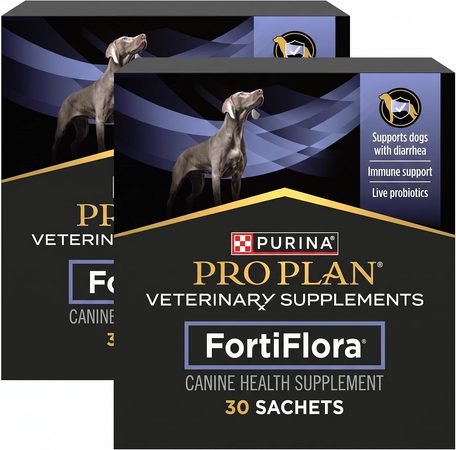
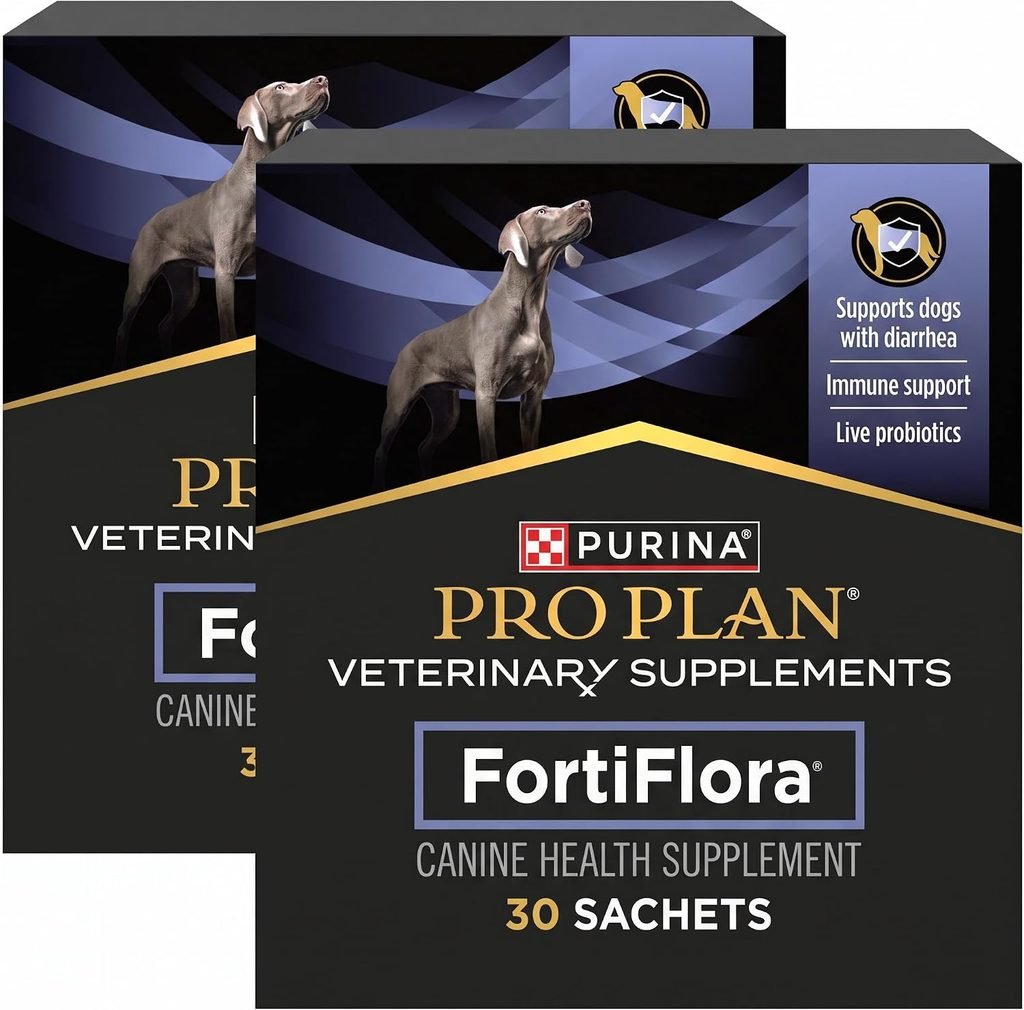
If you want a probiotic backed by actual veterinary formulation rather than a generic supplement blend, Purina Pro Plan FortiFlora is one of the most widely recommended options by vets. Each sachet delivers a guaranteed dose of live Enterococcus faecium probiotics, along with additional nutrients that support digestive and immune health. It’s formulated specifically to help dogs dealing with diarrhea or general digestive upset, and it’s simple to use — just sprinkle one sachet over food once a day.
It’s a favorite in veterinary clinics for a reason: consistent dosing, a well-researched strain, and a track record with nearly 50,000 reviews and a 4.7-star average. It’s not a treatment for underlying conditions, but as a daily digestive support supplement, it’s one of the more reliable choices on the market.
This post contains an affiliate link. If you make a purchase through it, we may earn a small commission at no extra cost to you.
What Doesn’t Work
Cheap, generic “probiotic” treats with no named strains or CFU count are often mostly filler. Human probiotics aren’t a safe substitute either — the strains and dosing are formulated for the human gut, not a dog’s, and some products contain xylitol or other ingredients that are toxic to dogs. Always use a product made specifically for dogs.
How to Introduce a Probiotic
Start with a lower dose than the label suggests for the first few days, especially if your dog has a sensitive stomach — introducing new bacteria too fast can temporarily cause more gas or looser stools, which is counterproductive. Give it consistently, ideally with food, and expect to wait two to four weeks before judging whether it’s making a real difference. Gut health changes gradually, not overnight.
When Probiotics Aren’t Enough
If your dog’s digestive issues persist despite a probiotic, or if you notice blood in the stool, significant weight loss, vomiting, lethargy, or a loss of appetite, that’s beyond what a supplement can address. These are signs that need veterinary diagnosis — a probiotic is a supportive tool, not a treatment for underlying disease.
Frequently Asked Questions
Can I give my dog probiotics every day?
Yes, most dog probiotics are formulated for daily use, especially maintenance formulas. Follow the label dosing, and check with your vet if your dog has a chronic condition.
How long does it take for probiotics to work?
Most dogs show some improvement within one to two weeks, but a full assessment usually takes three to four weeks of consistent use.
Are yogurt or kefir a substitute for a dog probiotic supplement?
Plain, unsweetened yogurt or kefir can offer some probiotic benefit, but the bacterial strains and concentrations are inconsistent and not specifically chosen for canine gut health. They can be a nice addition, but not a substitute for a targeted supplement, especially if you’re addressing a specific issue.
Can probiotics cause side effects?
Mild, temporary gas or stool changes are common in the first few days as the gut adjusts. Persistent vomiting, diarrhea, or discomfort after starting a probiotic is a sign to stop and consult your vet.
The Bottom Line
Not every probiotic on the shelf actually delivers what it claims. Look for named, research-backed strains, a guaranteed CFU count through the expiration date, and third-party testing — and give it time to work. Combined with a good diet and, when needed, your vet’s guidance, the right probiotic can make a real difference for a dog with a sensitive stomach.