
If your dog deals with regular loose stools, gas, or that unmistakable “here it comes” look before vomiting, you already know it’s rarely about one bad meal. It’s usually the daily diet itself. Here’s what actually helps — and one product worth trying first.
What “Sensitive Stomach” Really Means
A sensitive stomach isn’t a diagnosis, it’s a pattern. Digestive complaints are among the most common reasons dogs see the vet at all, and a meaningful share of those visits end with a diet change rather than medication.
The good news: for most dogs without a diagnosed medical condition, the fix isn’t complicated. Vets generally point to three things that matter most:
- One clearly named protein (not a vague “meat meal” blend)
- A gentle carbohydrate source like rice or oatmeal instead of corn or wheat
- Added prebiotics or probiotics to support gut bacteria
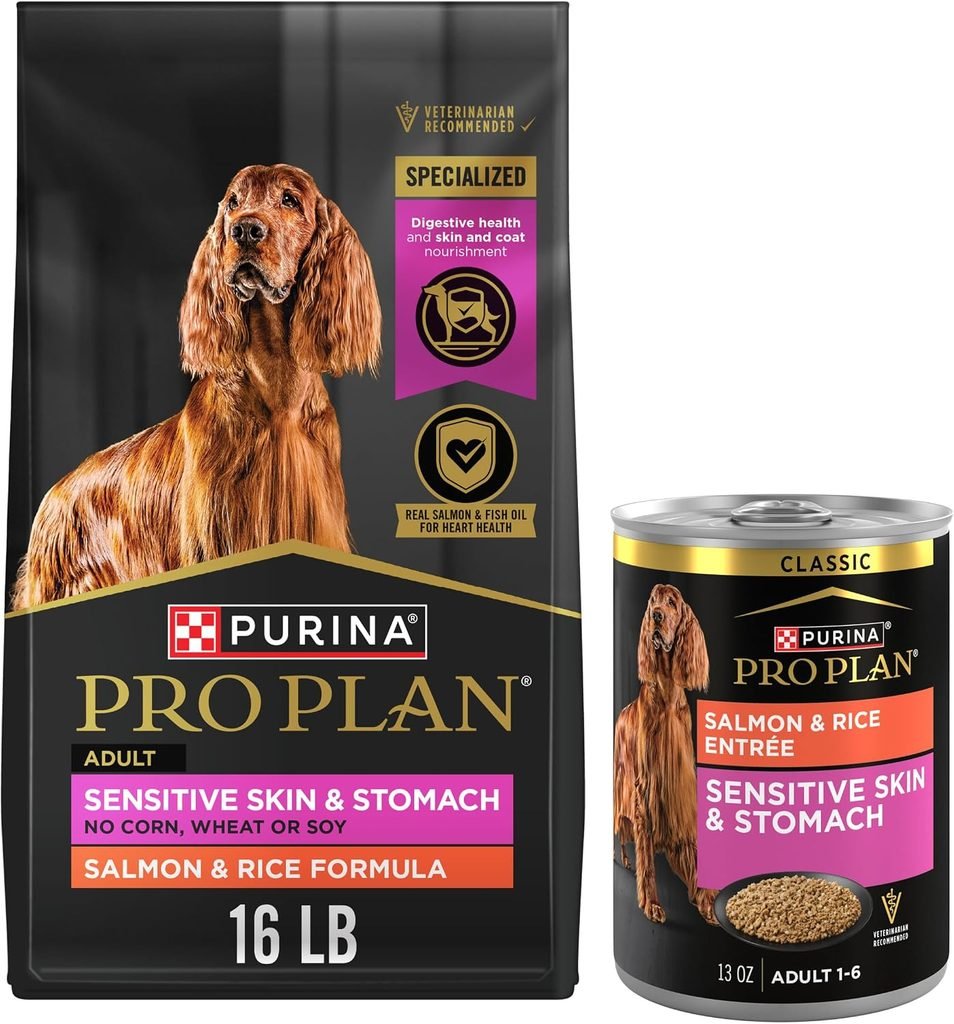
Our Pick: Purina Pro Plan Sensitive Skin & Stomach (Salmon & Rice)
Check the current price on Amazon →
This formula checks all three boxes above, which is exactly why it’s one of the most commonly recommended options by veterinarians — not just by marketing, but because the ingredient list is straightforward.
What’s in it:
- Real salmon as the first ingredient — a single, easily identified protein source
- Rice and oatmeal for gentle, digestible carbohydrates
- Prebiotic fiber to nourish beneficial gut bacteria
- Omega-6 fatty acids for skin and coat health (sensitive stomachs and skin issues often go together)
- No corn, wheat, or soy — common triggers for food sensitivity
Why This Combination Matters
Research on dogs with confirmed food reactions found that beef, dairy, chicken, and wheat topped the list of trigger ingredients — largely because they’re what dogs eat most often. Switching to a formula built around salmon (a less commonly used protein) and free of wheat removes several of the usual suspects in one move.
The added prebiotic fiber is also worth pointing out. It doesn’t just aid digestion in the moment — it supports the dog’s gut bacteria long-term, which is often the actual root of chronic sensitivity issues, not just what’s on the ingredient label.
How to Switch Foods Without Making It Worse
Even the right food can cause a flare-up if you switch too fast. The standard approach:
- Start with about 20-25% new food mixed with 75-80% old food
- Gradually increase the new food’s share over 7-10 days
- Watch for improvement in stool consistency, gas, and appetite
Rushing this process is one of the most common reasons a genuinely good food gets blamed for problems it didn’t cause.
Who Should Consider This Food
This formula is worth trying if your dog has:
- Recurring loose stools or gas without a diagnosed medical cause
- Skin and coat issues alongside digestive symptoms
- Been cycling through multiple foods without lasting improvement
When to see a vet instead: if symptoms are severe, sudden, or accompanied by vomiting, blood, lethargy, or weight loss, a diet change alone isn’t the answer — that calls for a veterinary visit first.
Final Verdict
For dogs with a mild, recurring sensitive stomach and no diagnosed condition, Purina Pro Plan Sensitive Skin & Stomach (Salmon & Rice) hits the fundamentals that actually matter: one named protein, gentle carbs, and prebiotic support — without the guesswork of a specialty prescription diet.
See current pricing and reviews on Amazon →
As an Amazon Associate, PetZonePicks earns from qualifying purchases. Read our full Affiliate Disclosure for more information. This article is for informational purposes and is not a substitute for veterinary advice.